
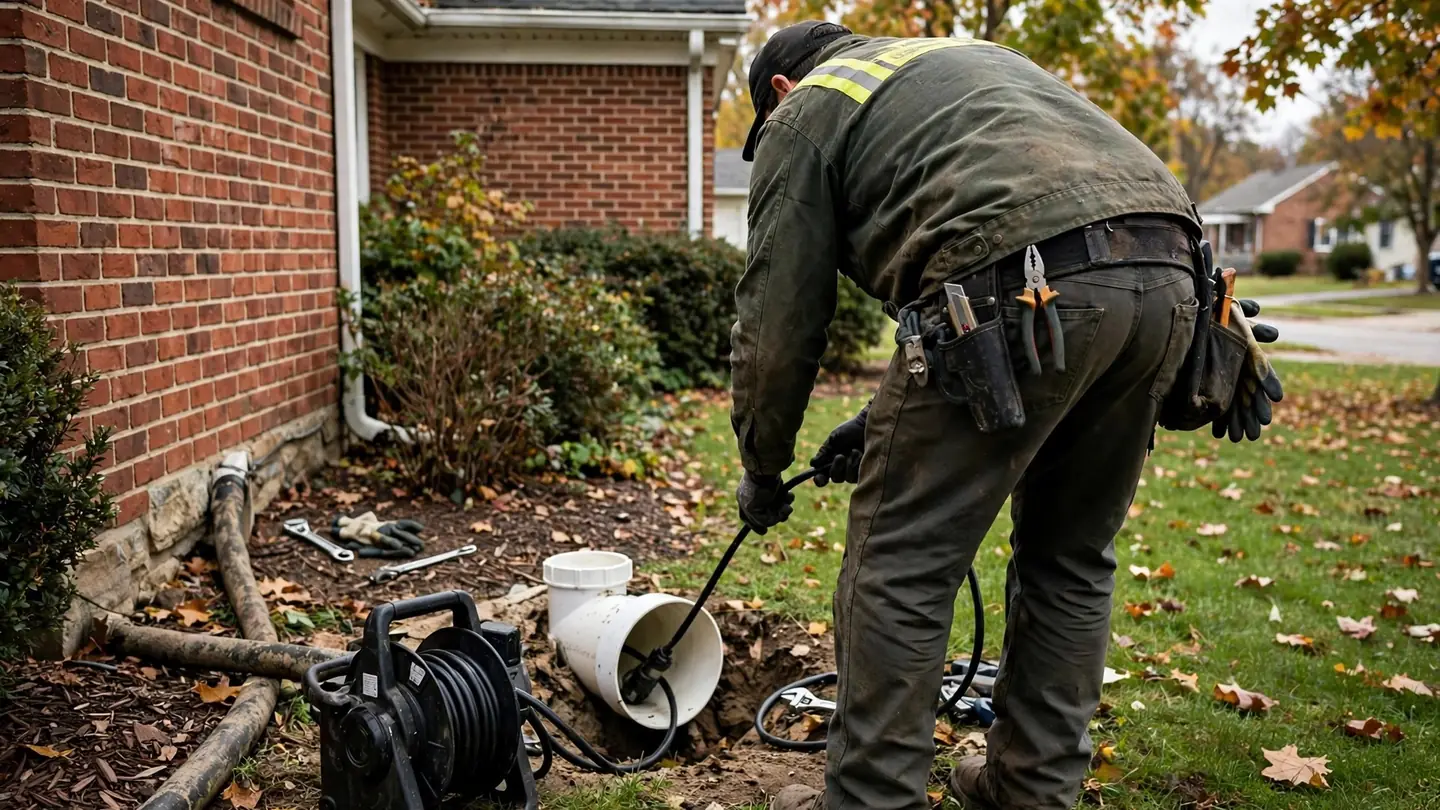
Laterals · Roots · Backups · Indianapolis
Indianapolis sewer line repair,from the cleanout to the main
A gurgling toilet, a floor drain that won't empty or wet ground over the line out front usually means the private sewer lateral is in trouble. One call connects you with an independent local contractor who works on house sewers across Indianapolis.
Call-in referral service. You speak with the contractor on the same call.
- Camera inspection first
- Roots, cracks and sags
- Trenchless or open-trench
- Basement backup help
- Call-in onlyNo forms and no callbacks: your own call reaches the contractor.
- Independent contractorsLocal sewer and plumbing firms who quote and do the work themselves.
- Permit-awareLateral repairs in Indianapolis run through a Citizens permit and inspection.
- Camera before diggingAsk for video of the line so the repair matches the defect.
Key facts: Home
- In Indianapolis the property owner maintains the sewer lateral from the house to where it joins the main [1].
- Repairs, replacements, cleanouts and lining of a lateral need a Citizens Energy Group permit; routine cleaning and root cutting do not [1].
- Only a licensed plumber or contractor may work on a lateral, and Citizens inspects the connection before the trench is backfilled [1].
- The DigIndy tunnels were finished in 2025 to capture combined sewer overflows, but they do not repair private house laterals [2].
Safety checklist
If sewage is coming up into the house
Stop running water: no flushing, no laundry, no dishwasher. Every gallon you send down the drain has to come back out of the lowest opening, which is usually the basement floor drain.
Keep children and pets away from the water, wear gloves and boots if you must walk through it, and do not touch electrical equipment while standing in water. Sewage carries bacteria and viruses, so treat everything it touched as contaminated.
- Stop all water use in the house
- Keep people and pets out of the wet area
- Shut off power to the basement only if you can reach the panel from a dry spot
- Call and describe where the water is coming from
What is your drain doing?
Match the symptom to the likely sewer problem
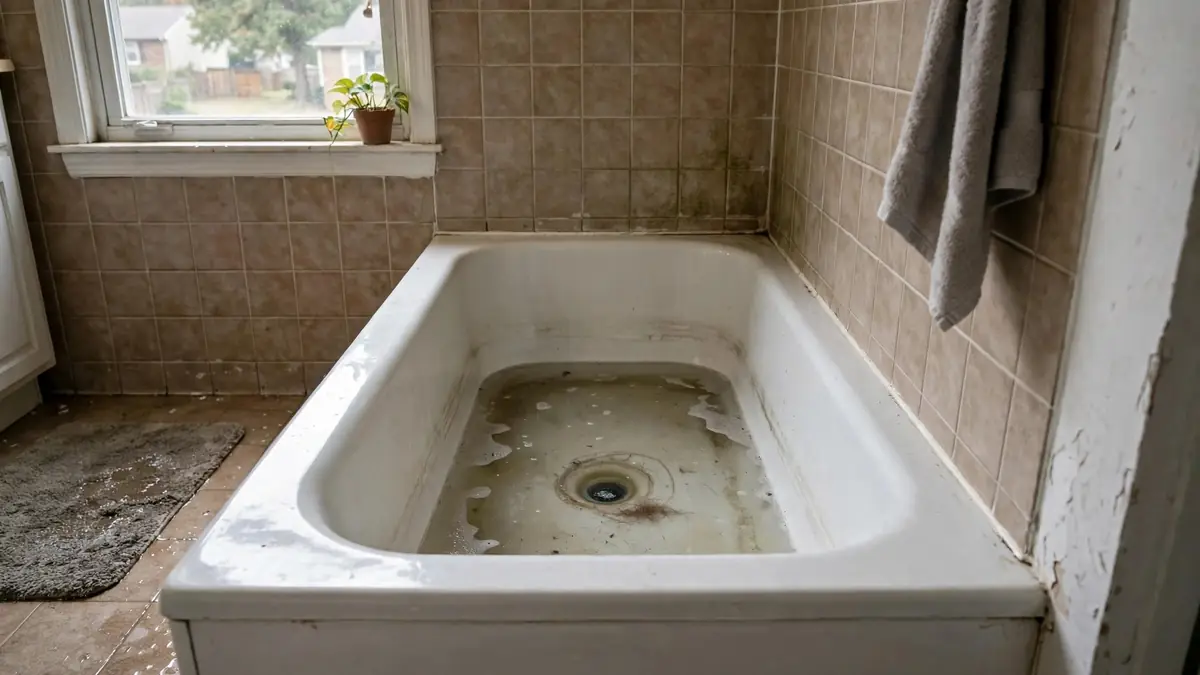
A single slow sink is usually a branch drain. Trouble that shows up at several fixtures, or at the lowest drain in the house, points at the main sewer line.
 1 / 6
Urgent
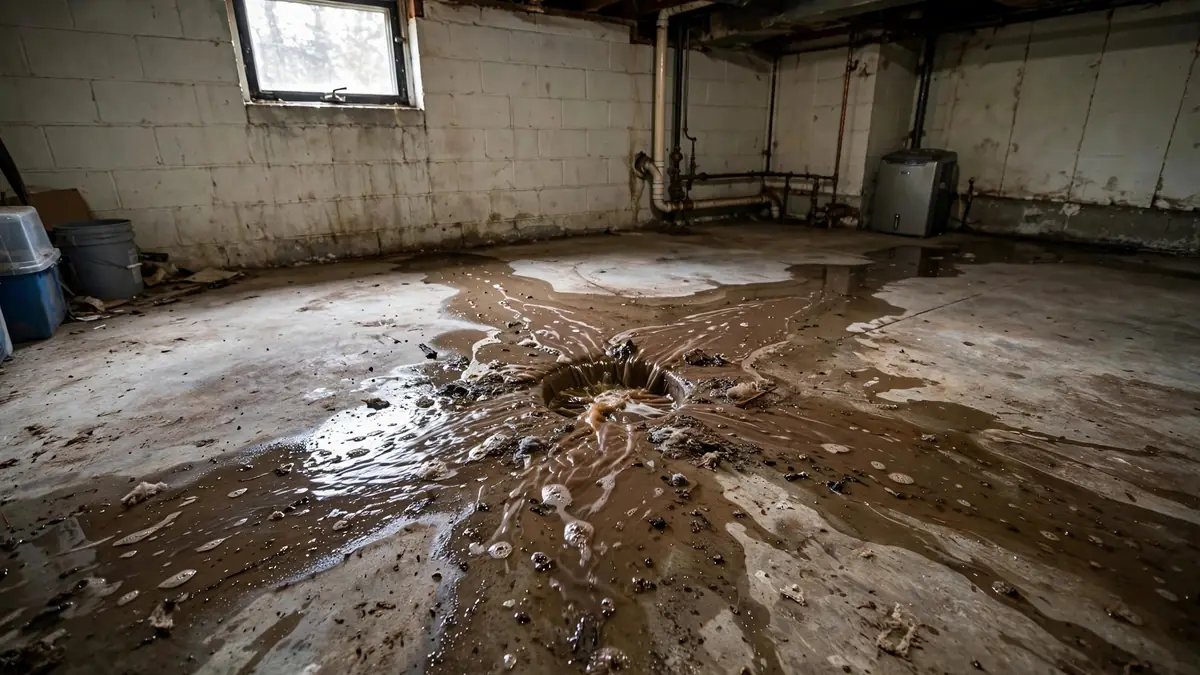
Floor drain backing up
Water rising through the basement floor drain when a washer empties or a tub drains is the classic sign of a blocked lateral. Read the basement backup guide.
Who owns what
The pipe between your house and the street is yours
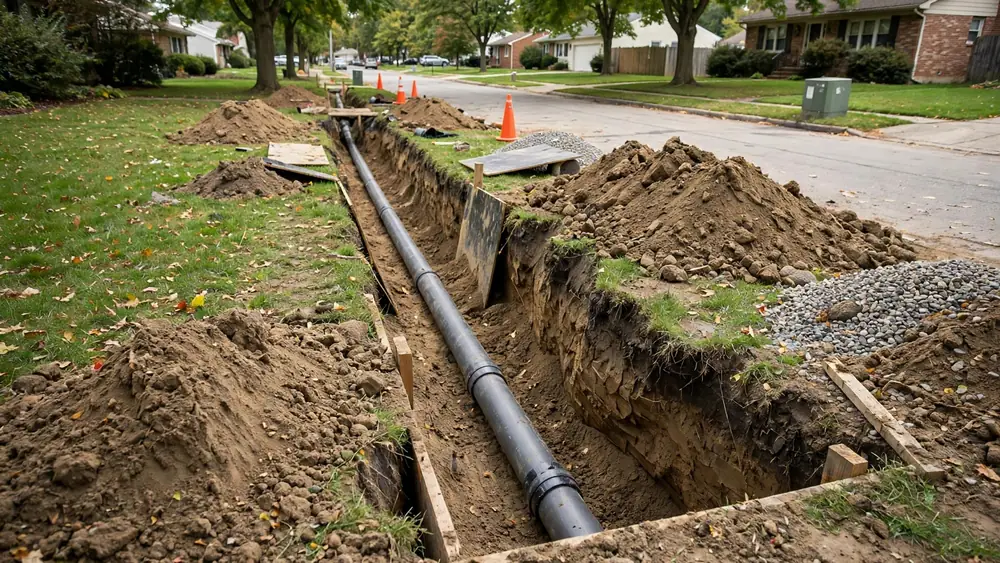
Every Indianapolis home connected to public sewer drains through a private pipe called a lateral (or house sewer). It leaves the foundation, usually under the basement floor or through the front wall, and runs under the yard to the main, which often sits under the street. Citizens Energy Group, which runs the city's wastewater system, states that the property owner is responsible for maintaining that lateral from the home to the connection at the main [1].
That makes most sewer line repair a homeowner job. The utility handles the main; you hire a licensed contractor for the lateral. When the connection itself has failed out in the street, the repair still involves your contractor, a permit and often a right-of-way excavation.
- House to main: owner's responsibility
- The main and treatment: Citizens Energy Group
- Permit for repairs, lining and replacement
- Citizens inspects before backfill
Services
Sewer services you can be connected with
Each page explains what the job involves, how a contractor decides on it and what to ask before work starts.
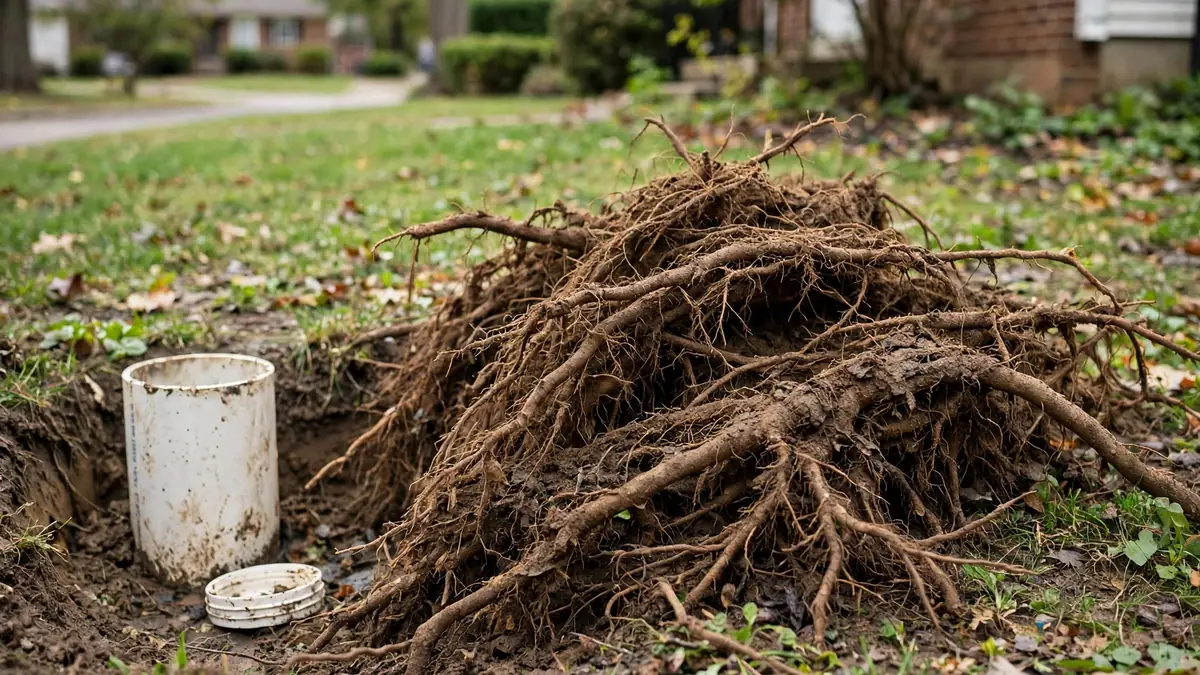
Root Intrusion Removal
Cutting or jetting tree roots out of a clay lateral, then deciding how to keep them from growing straight back.
Explore service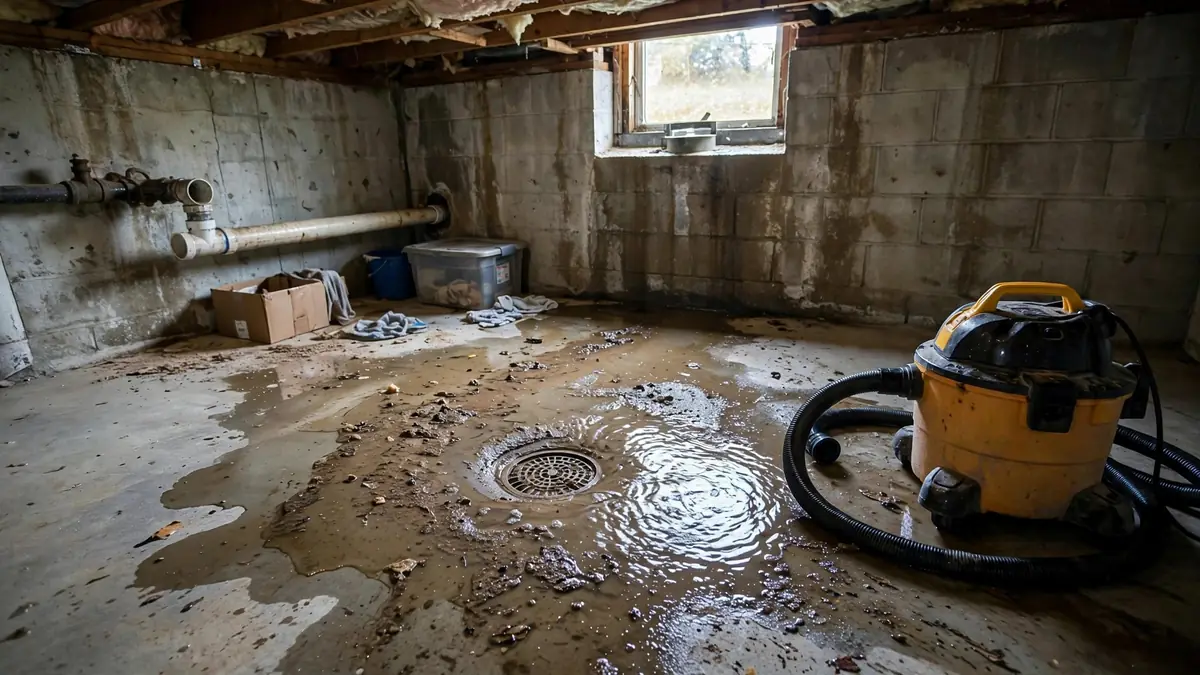
Sewer Backup Cleanup
Getting the line flowing, finding why it backed up, and cleaning and disinfecting the basement the right way.
Explore serviceSewer Camera Inspection
A video look inside the lateral that shows roots, cracks, sags and offsets, and where they are, before anyone digs.
Explore serviceSewer Line Replacement
Replacing a worn-out lateral end to end, by open trench or bursting, with a permit and a Citizens inspection before backfill.
Explore service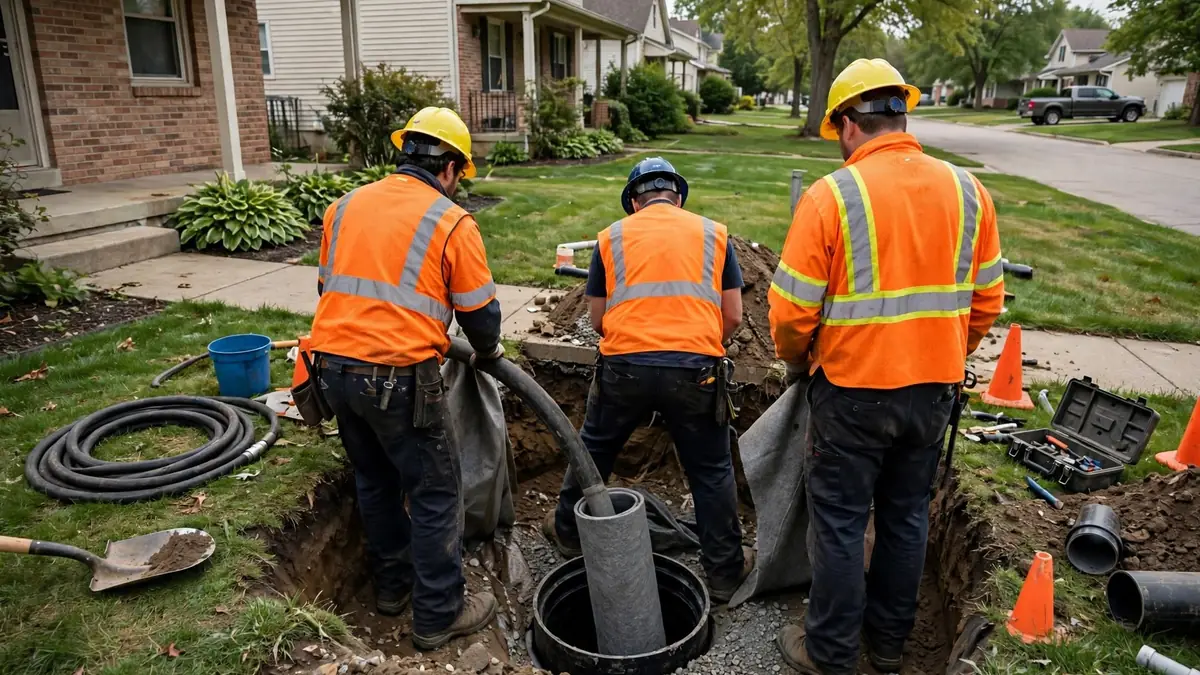
Trenchless Sewer Repair
Lining or bursting a failing lateral through small access pits, so the lawn, walk and trees above it stay put.
Explore service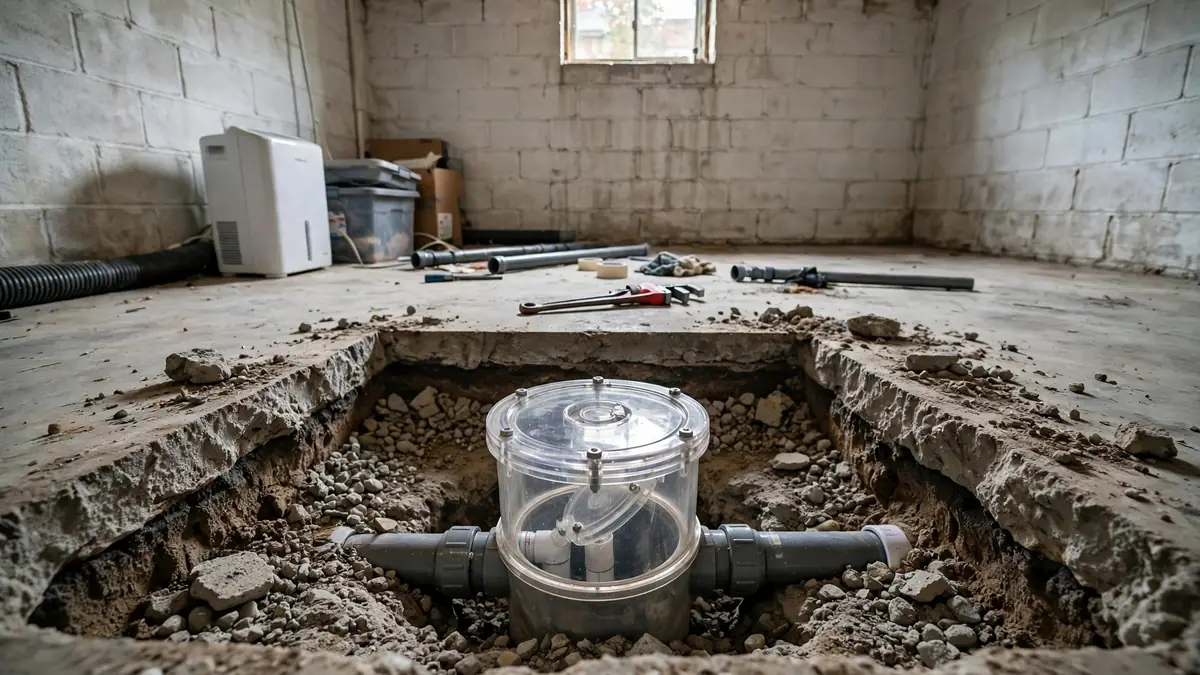
Backwater Valve Installation
A check valve in the building drain that closes when sewage tries to flow back from the street into the basement.
Explore service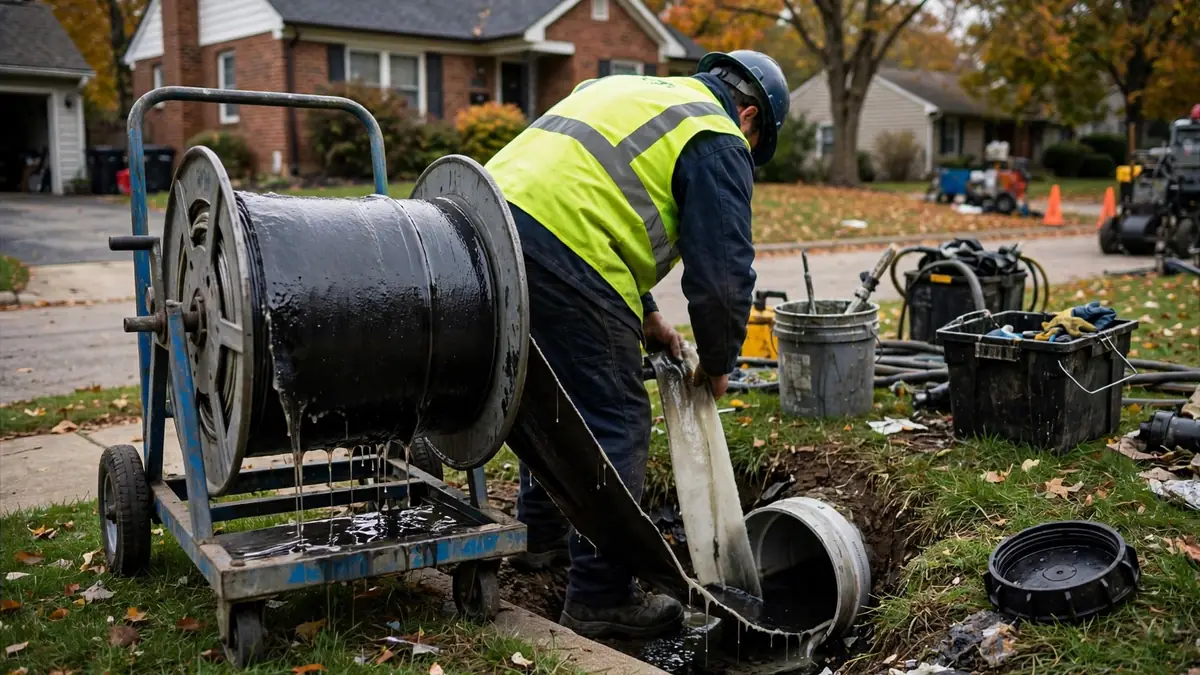
CIPP Pipe Lining
A resin-soaked tube cured inside the old lateral to form a seamless new pipe that seals every root-prone joint.
Explore service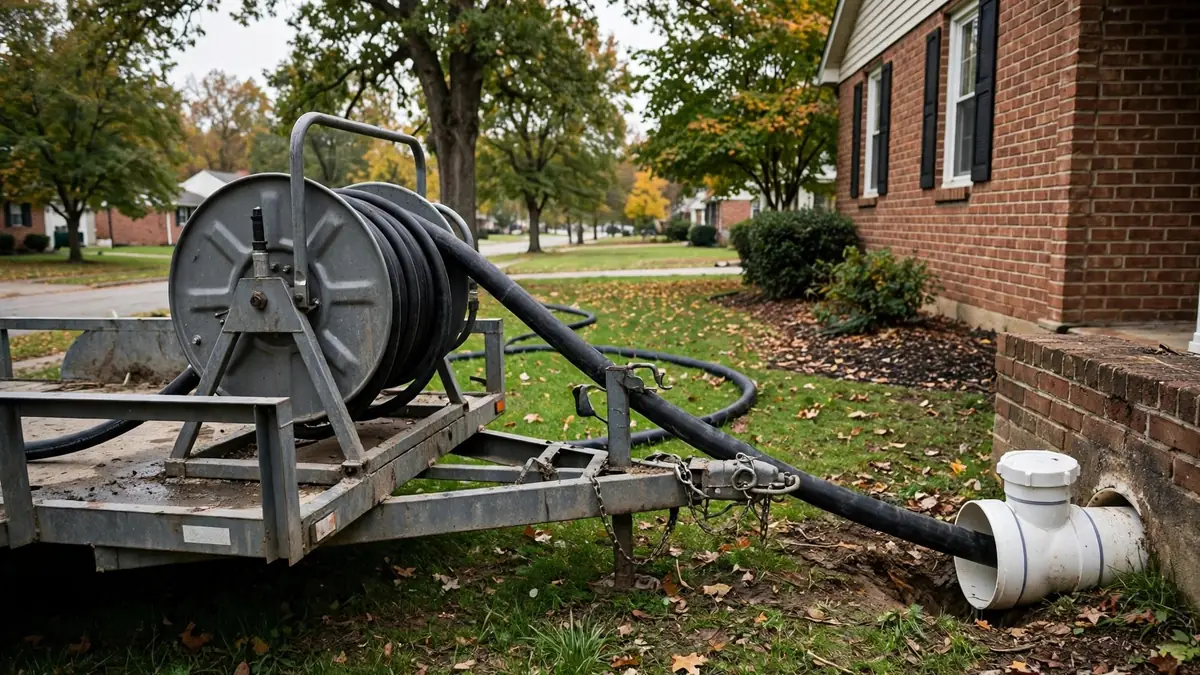
Hydro Jetting
Scouring a lateral with high-pressure water to cut roots, strip grease and flush debris, when the pipe can take it.
Explore service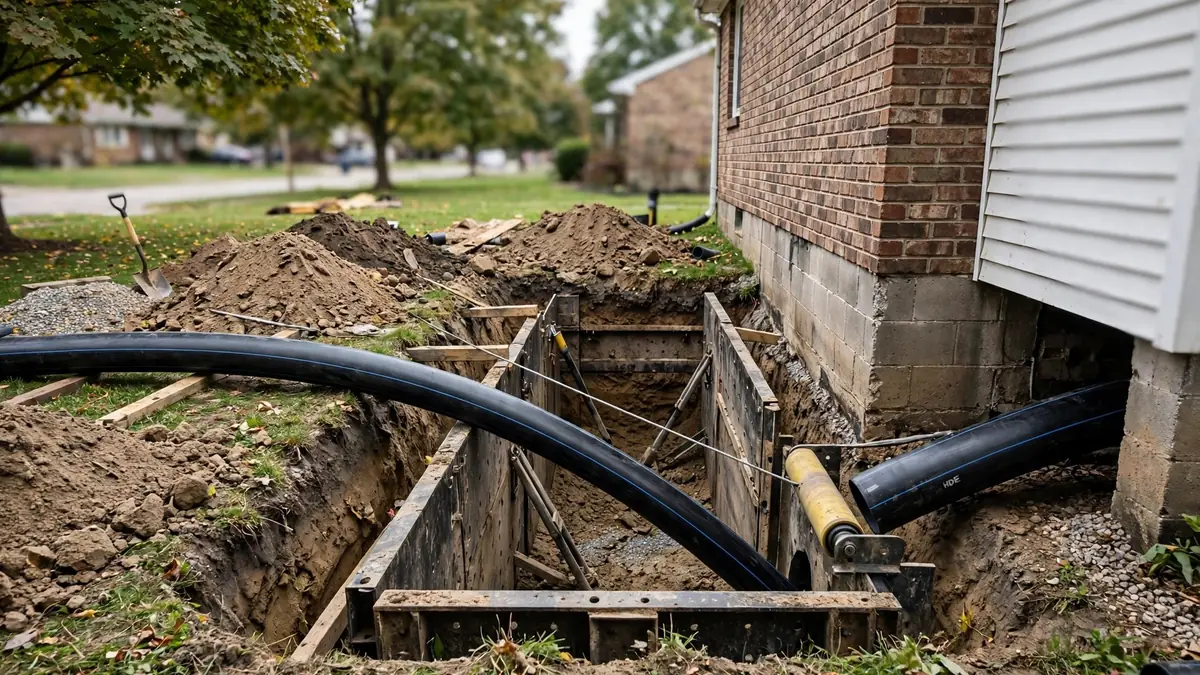
Pipe Bursting
Splitting an old clay or fiber lateral underground while pulling new fused polyethylene pipe into its place.
Explore service
How it works
From your call to a working sewer
This site does not do the work. It connects your call with an independent contractor, and you decide everything after that on the call.
- 1
Call and describe the problem
Say which drains are affected, whether water has come up in the basement and roughly when the house was built.
- 2
Talk it through with the contractor
The contractor you are connected with asks follow-up questions and explains what a visit would involve.
- 3
Camera and locate
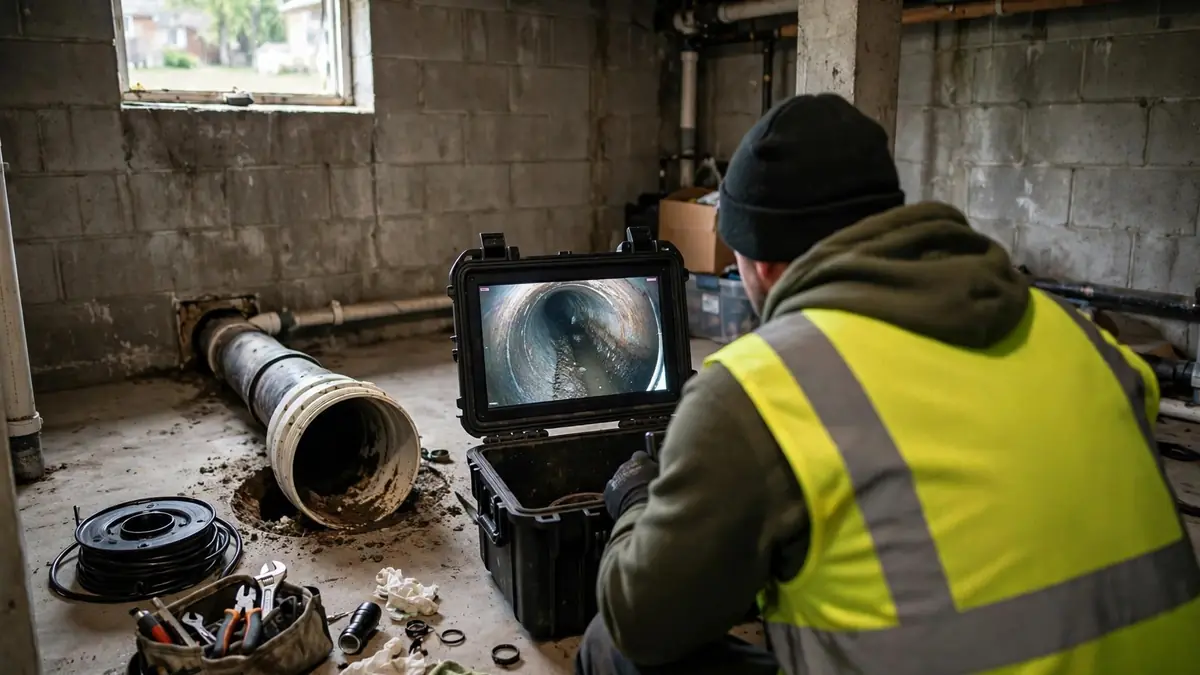
A good diagnosis starts with clearing enough of the line to run a camera, then locating the defect and its depth.
- 4
Choose the repair
Spot repair, lining, pipe bursting or open-trench replacement, based on what the video shows.
- 5
Permit, inspection and backfill
The contractor applies to Citizens for the permit and calls for the inspection before backfilling [1].
Repair options
Which sewer repair fits which defect
The video decides the method. This is how contractors generally match the two.
| What the camera shows | Usually considered | Why |
|---|---|---|
| Fine roots at a few joints, pipe round | Cutting or jetting, then lining | The pipe is sound; the joints are the weak point |
| One cracked or broken section | Spot repair by excavation or a sectional liner | Fixes the defect without disturbing the rest |
| Cracks and roots along most of the run | Full-length lining or pipe bursting | Replaces the flow path with little digging |
| Collapsed or flattened pipe | Pipe bursting or open-trench replacement | A liner needs an open pipe to go into |
| Belly holding water | Excavate and relay the section | Lining follows the sag rather than correcting it |
| Offset at the main connection | Excavation at the tap, permit and inspection | The connection must meet utility standards |
Final choice depends on depth, access, pipe material and what the contractor sees on video.
Before and after
Typical sewer jobs, start to finish
Example images of the kinds of work described on this site.
- BeforeAfter
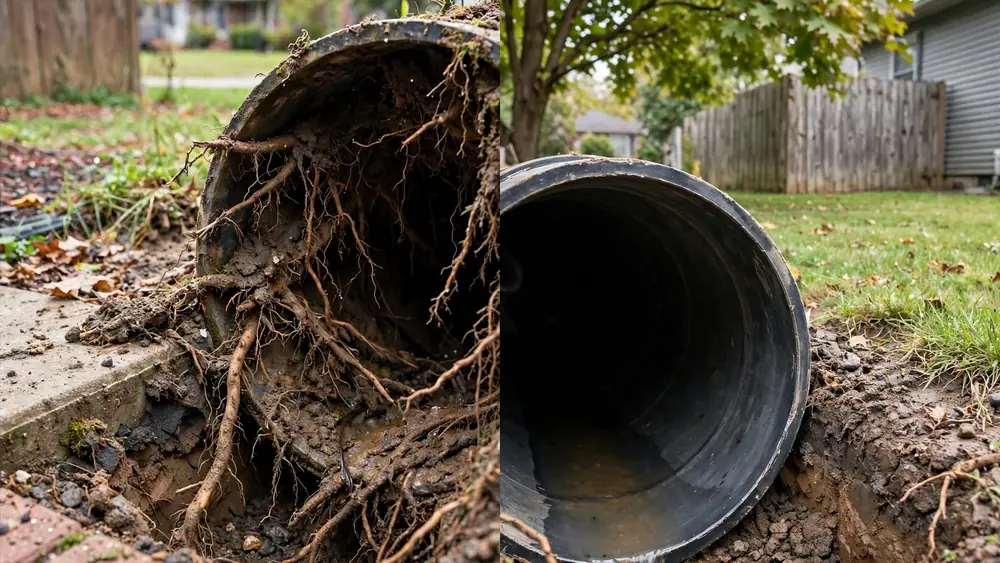
Root mass cleared
Cutting opens the line; lining or replacement stops the regrowth.
- BeforeAfter
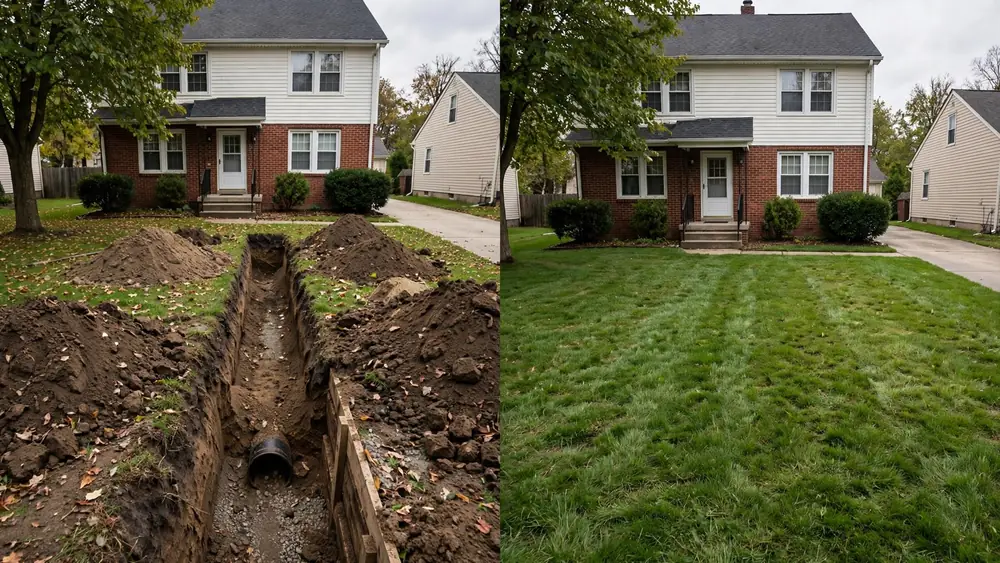
Yard restored
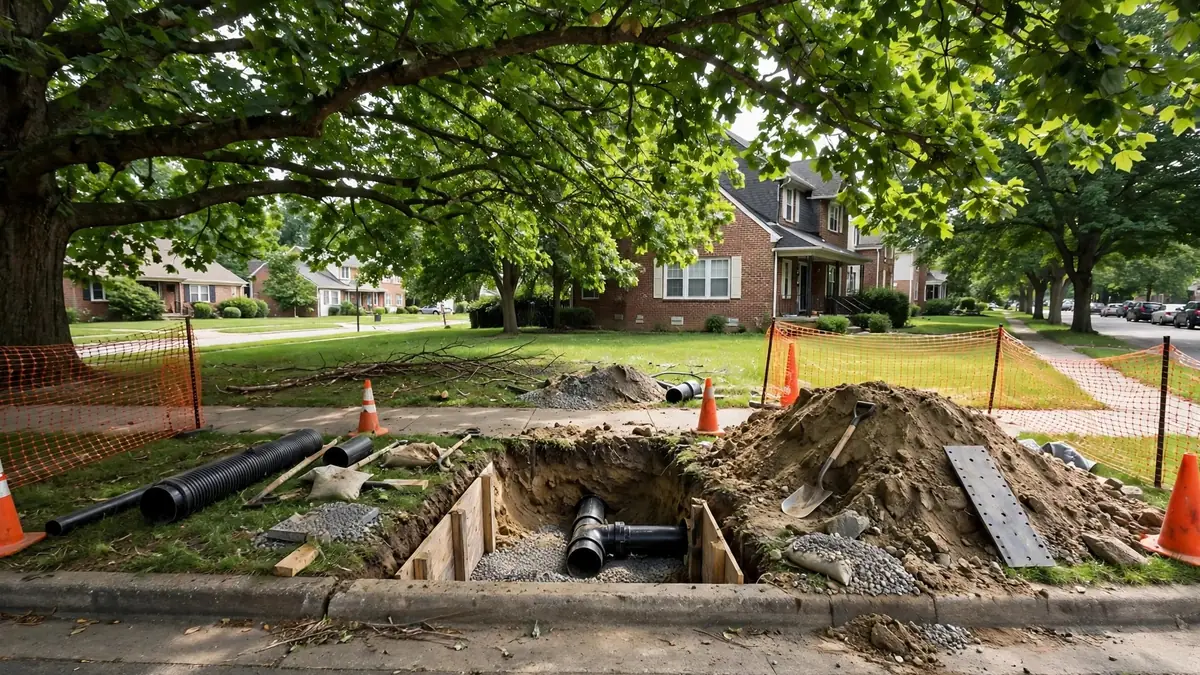
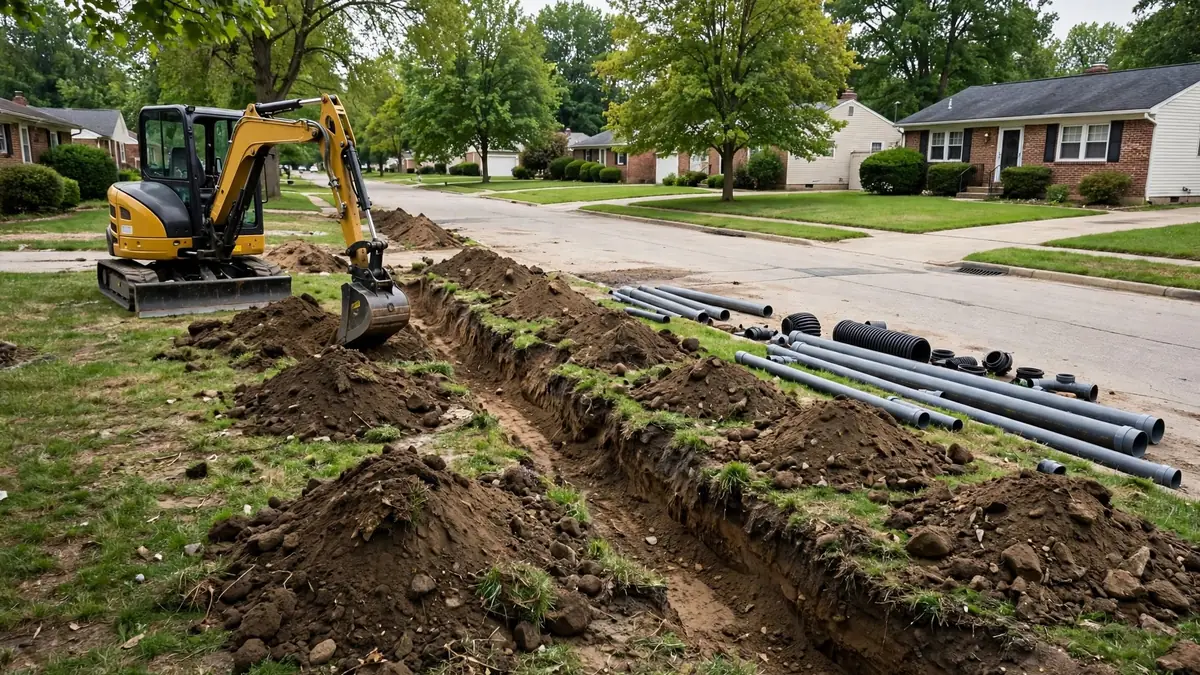
Open-trench repairs end with backfill after the Citizens inspection.
- BeforeAfter
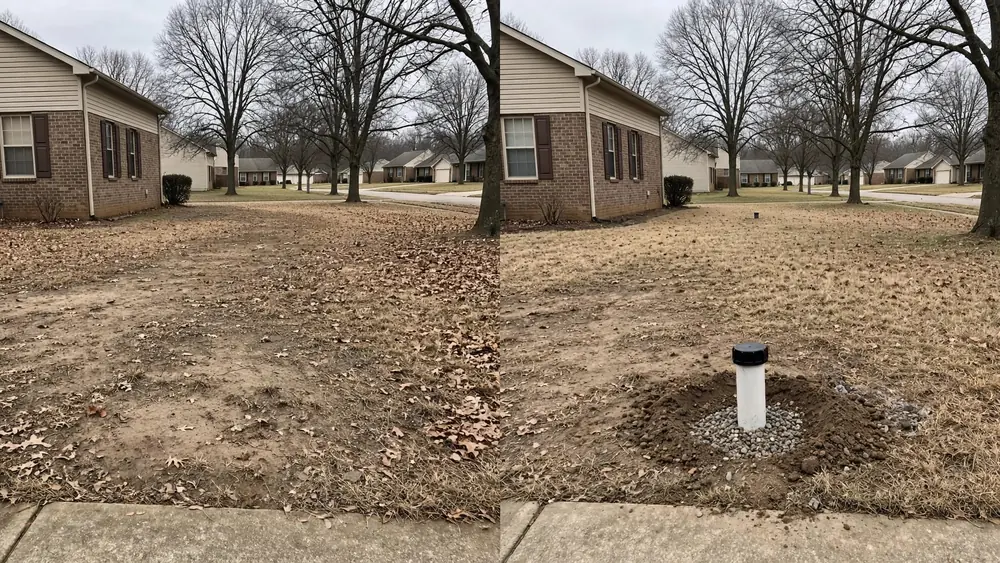
New outside cleanout
An accessible cleanout makes future clearing and camera work simpler.
- BeforeAfter
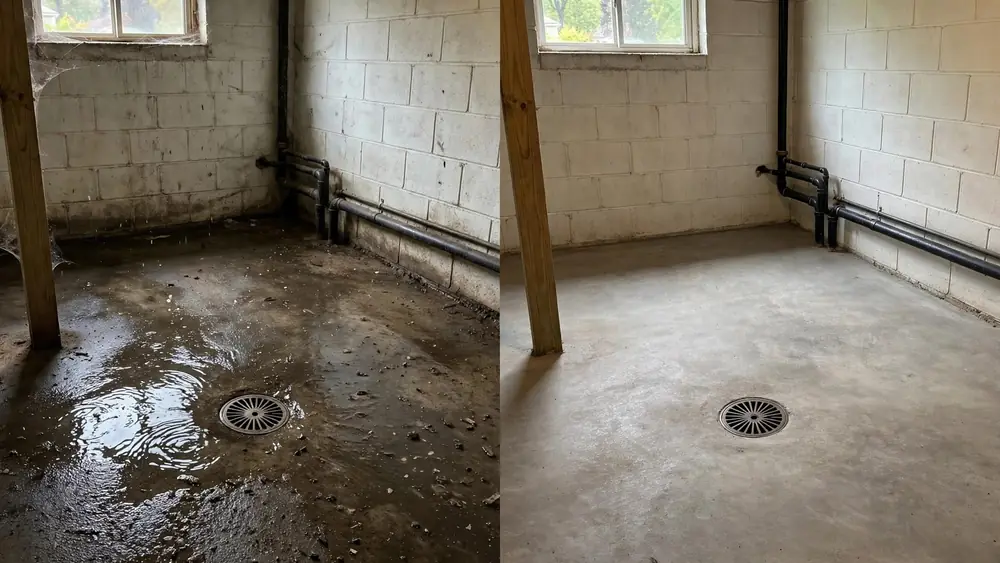
Basement cleaned up
Cleanup follows the repair, not the other way around.
- BeforeAfter
Belly removed
A sag that holds water usually needs the section relaid at the right slope.
- BeforeAfter
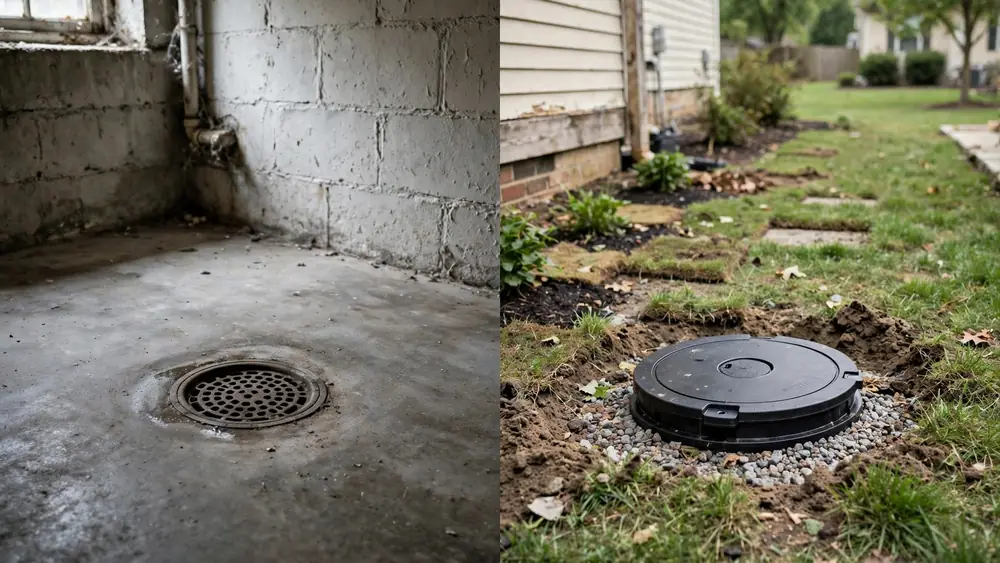
Backwater valve fitted
A valve can stop sewage from the street flowing back into the basement.
Example images, not photos of specific jobs. Every job depends on the property and the damage.
Older pipe
Why so many Indianapolis laterals give out
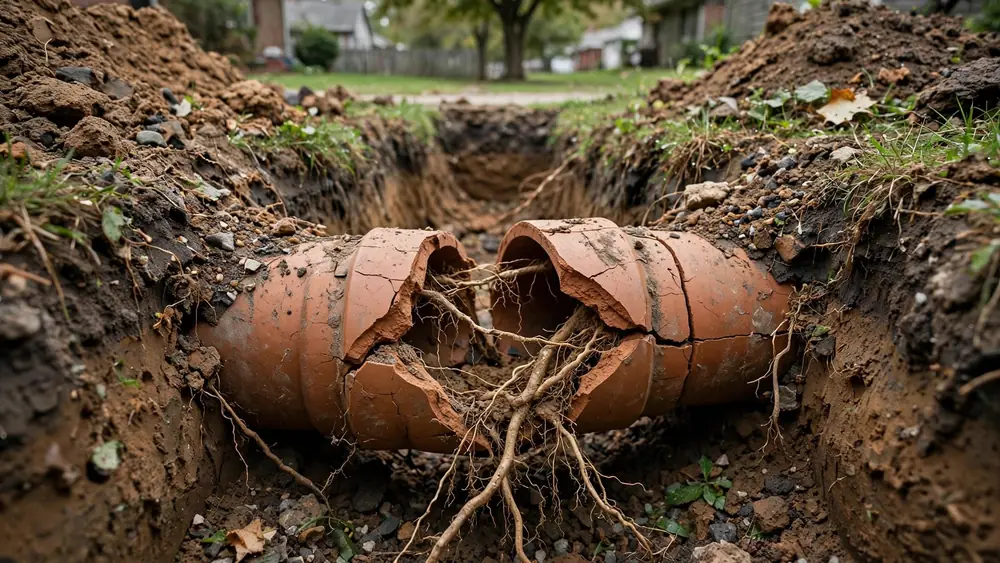
Much of the city inside the old boundaries was built before 1950, and those homes were usually connected with short sections of vitrified clay pipe joined with mortar or packing. Clay itself lasts a long time, but every joint is a gap a root can find. Citizens has itself repaired a clay lateral downtown that was more than 100 years old [3].
Homes from the 1940s to the early 1970s sometimes have bituminized fiber pipe, known by the trade name Orangeburg, which can soften and flatten under soil load as it ages [4]. Post-war cast iron can corrode from the inside. Later homes usually have PVC, which fails less often but can still sag, crack under a driveway or separate at a poorly bedded joint.
- Clay joints invite roots
- Fiber pipe can flatten
- Cast iron scales and splits
- Sags hold water and solids
Neighborhoods
Indianapolis neighborhoods with their own sewer stories
Older districts, river-edge streets and tree-lined blocks each bring different lateral problems. Covered areas include these neighborhoods and many more Indianapolis ZIP codes.
 Service area
Broad Ripple
A former canal-side town north of downtown, with river-edge streets, cottages, newer apartments and a busy restaurant strip.
Learn more Service area
Butler-Tarkington
Built out from the 1910s to the 1940s between Crown Hill and the Central Canal, around Butler University's campus.
Learn more Service area
Fountain Square
Southeast-side streets platted in the 1870s, three historic districts, rehabbed cottages and interstate-era rebuilding.
Learn more Service area
Garfield Park
Bungalows, foursquares and doubles around the city's oldest park, with Pleasant Run and Bean Creek running through it.
Learn more Service area
Irvington
An 1870s east-side suburb turned historic district, with curving streets, big trees and century-old clay laterals.
Learn more Service area
Meridian-Kessler
Large 1920s and 1930s houses on wooded lots to the west, bungalow streets to the east, and big trees over old laterals.
Learn more
On camera
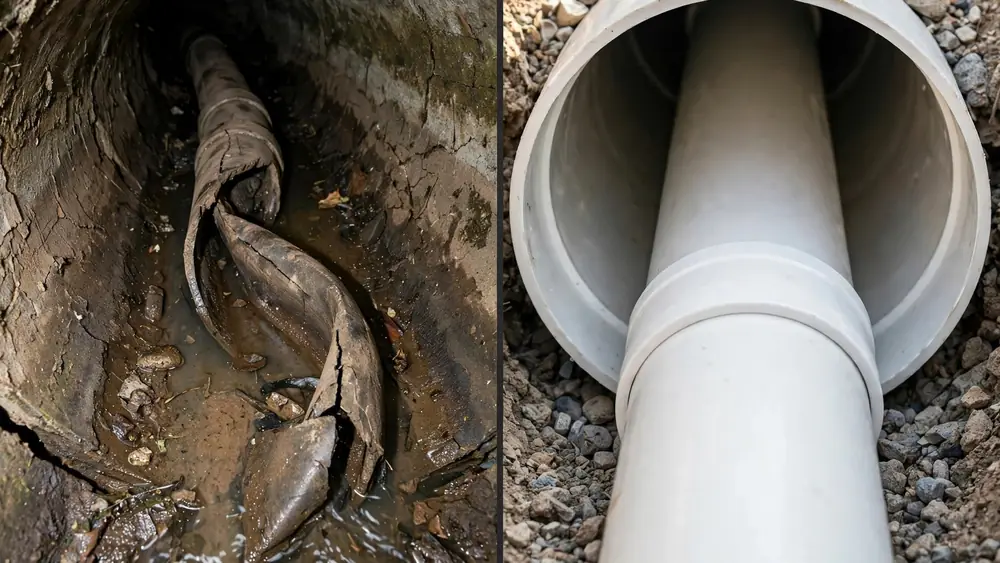
What a lined lateral looks like on the monitor
Ask for the inspection video. It is the clearest record of what the contractor is proposing to fix.
 Roots at a clay jointSmooth liner after curing
Questions
Common questions about Indianapolis sewer lines
Short answers. The service pages and guides go further.
Who is responsible for the sewer line in front of my Indianapolis house?
The property owner is responsible for the lateral from the house to where it connects to the public main, according to Citizens Energy Group. Citizens maintains the main itself. A licensed contractor must do any work on your lateral.
Do I need a permit to repair my sewer lateral in Indianapolis?
Yes for repairs, replacements, new cleanouts and lining. Citizens Energy Group requires a permit for work outside the building footprint, and the contractor applies for it. Routine cleaning and root cutting do not need a permit.
Can a broken sewer line be fixed without digging up the yard?
Often, yes. If the pipe is still round enough to pass a liner, cured-in-place lining or pipe bursting can replace the flow path through one or two small pits. Collapsed sections, sags and failed connections usually still need some excavation.
Why does my basement floor drain back up when I do laundry?
The floor drain is usually the lowest opening in the house, so when the lateral is partly blocked, water from the washer has nowhere to go but up through it. Roots, grease and a sagging section are the usual causes.
Is this site a plumbing company?
No. Sewer Line Repair Indianapolis is a call-in referral service. Your call connects to an independent local contractor who speaks with you on that call; that contractor quotes and performs any work.
How do I know whether it is the main line or just one drain?
If only one sink or tub is slow, the clog is probably in that fixture's branch. If several fixtures are slow at once, toilets gurgle when other drains run, or the lowest drain backs up, the main sewer line is the likely problem.
Local context
Indianapolis sewers, DigIndy and your basement
Older parts of Indianapolis are served by combined sewers, which carry both rainwater and wastewater in one pipe. In heavy rain those pipes historically overflowed into Fall Creek, Pleasant Run and the White River. Under a 2006 federal consent decree, the city and later Citizens Energy Group built DigIndy, a 28-mile network of 18-foot tunnels about 250 feet below the city that stores overflow until the treatment plants can take it. Construction finished in 2025 [2].
DigIndy reduces overflows to streams, but it does nothing for a cracked or root-filled lateral on private property. If your basement drain backs up on a dry day, the cause is almost always in your own line. If it backs up only during intense storms, the cause may be a surcharged public sewer, and a backwater valve is worth discussing with the contractor.
Before anyone digs, Indiana law expects a locate request through Indiana 811 so buried gas, electric and water lines are marked [5]. Your private lateral is not something the utilities mark, which is one reason a camera with a locating transmitter is the first step on most jobs.
Guides
Read up before you call
Plain-language guides to the sewer problems Indianapolis homeowners run into most.
- Guide
Sewer backup in the basement
What to do in the first minutes when sewage comes up the floor drain, and how to work out why it happened.
Read the guide - Guide
Sewer smell in the yard
Tracking down a rotten-egg odor outside: cleanout caps, vents, broken laterals and the public sewer.
Read the guide - Guide
Signs of a broken sewer line
The inside and outside clues that a lateral is cracked, root-filled or collapsing, and how to tell them from an ordinary clog.
Read the guide - Guide
Tree roots in the sewer line
Why roots get into old laterals, how to confirm it, and the choice between clearing them regularly and sealing the pipe.
Read the guide  Guide
Trenchless vs excavation
How lining, bursting and open-trench repair compare, which defects each can fix, and the questions that settle the choice.
Read the guide
Before the visit
Five things to have ready when you call
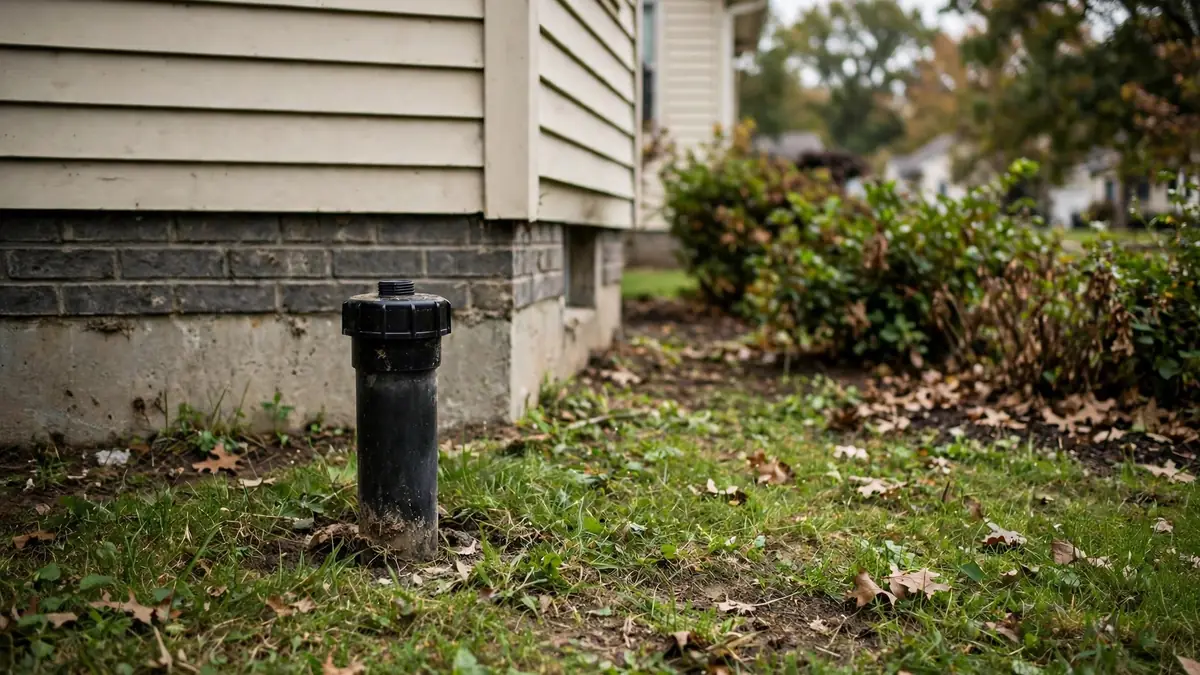
Know where your cleanout is, if you have one. In many Indianapolis houses it is a capped pipe in the basement floor or on the front wall near the floor; newer homes often have one outside near the foundation. If you cannot find it, say so, because it changes how the contractor gets a camera into the line.
Know roughly when the house was built and whether the sewer has ever been replaced. Note which drains are slow and whether water has come up anywhere. If you have an old inspection video or report from when you bought the house, have it ready. And mention large trees in the front yard or the tree lawn, since their roots are the most common cause of repeat clogs in older neighborhoods.
Ask the contractor you are connected with how they plan to diagnose the line, whether they will share the video, which repair methods they offer, and how the Citizens permit and inspection fit into the schedule. Check their status with the Indiana Professional Licensing Agency's plumbing commission before work starts [6].
Ready when you are
Talk to an Indianapolis sewer contractor today
Describe what your drains are doing and you will be connected with an independent local contractor on the same call.
Sources and citations
- [1]Citizens Energy Group — Connecting a sewer service line (owner responsibility and permits)
- [2]Citizens Energy Group — What is DigIndy?
- [3]Citizens Energy Group — Sewer lateral repairs on Pennsylvania Street
- [4]Wikipedia — Orangeburg pipe
- [5]Indiana 811 — Call before you dig
- [6]Indiana Professional Licensing Agency — Plumbing Commission